Hey everyone, I’m Jake, and I’ve been running an anti-scratch laminating film supply business for almost 7 years now. Most days, I get at least a handful of emails from new customers asking the same, super specific question: “Does anti-scratch laminating film have anti-static coating?” It’s not a weird question, either—if you’ve ever worked with laminating film before, you know static cling can turn a quick project into a mess. You might have tiny plastic dust sticking to your film right out of the roll, or laminated prints that attract lint like a magnet once they’re up. It’s frustrating, right? So let me break this down the way I do for my clients, no fancy jargon, just real answers from the guy who makes this stuff for a living. Anti-scratch Laminating Film
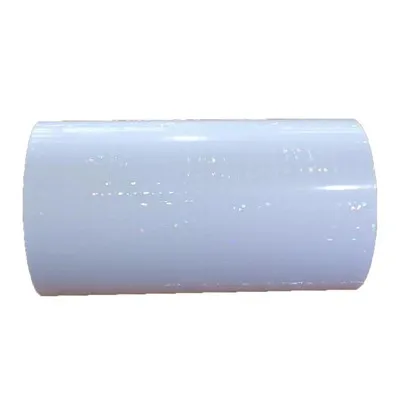
First off, let’s start with what anti-scratch laminating film even is, because a lot of people mix this up with regular laminating film. Regular film is just for protecting prints, adding a little gloss or matte finish. Anti-scratch film, though, has a hard coating (usually a thermoplastic urethane, TPU, or a cross-linked acrylic layer) on the surface that makes it way more resistant to scuffs, scratches, and even small impacts. That’s why you’ll see it used for things like outdoor signage, vehicle wraps, menu covers that get slammed around at cafes, or even phone cases—stuff that’s going to take a beating.
Now, back to the anti-static part. The short answer is: it depends. Wait, that sounds vague, but hear me out. Not every anti-scratch laminating film comes with anti-static coating, but a lot of the ones we (and most reputable suppliers) sell do—for good reason. Let’s talk about why you’d want that coating in the first place. Static is a big problem with plastic films, full stop. When two plastic surfaces rub together (like the film unwinding off a roll, or pressing against a print paper), electrons transfer between them, building up a static charge. That charge doesn’t just make dust stick—if you’re working with the film for a long print run, it can cause the film to curl, misalign, or even cause tiny sparks that mess with digital printers if you’re using electrostatic ink. For a lot of our customers, that’s a dealbreaker.
But here’s where the mix-up happens: anti-scratch coating and anti-static coating aren’t the same thing. They’re two separate layers. The anti-scratch layer is the hard, outer surface that resists scuffs. The anti-static layer is a thin, conductive coating (usually made with carbon nanoparticles, quaternary ammonium compounds, or a special polymer that lets electrons flow) that sits somewhere—either on the back side of the film (the side that adheres to the print) or between the anti-scratch layer and the core of the film. That layer lets excess electrons dissipate, so the charge doesn’t build up. A lot of cheap brands cut corners here—they skip the anti-static layer to save a few cents per roll, which means you’re stuck fighting static every time you use it.
Now, let’s get specific about when anti-scratch laminating film does have anti-static coating. If you’re using this film for indoor applications—like menu covers, wall decals, or indoor posters—you might not even need anti-static, but most of our standard anti-scratch rolls come with it anyway, because it makes the product way easier to handle. Outdoor applications are a different story: if you’re doing vehicle wraps or outdoor signage, you’re often working in dry, low-humidity environments (like winter months, or arid climates) where static is way worse. We always include anti-static coating in our outdoor-grade anti-scratch film because in those conditions, without it, the film would attract dust, lint, and even pollen before you’re done applying it. You’d end up with little specks all over your finished product, and fixing that is a total headache.
There’s also a niche use case where anti-static is non-negotiable: industrial applications. Like, if you’re laminating parts for electronics (wait, no—mostly we supply for signage and wraps, but some clients use our film for packaging that handles small electronic components), static can actually damage tiny circuit parts. For those clients, we make a specialized version of anti-scratch film that has both anti-scratch and anti-static properties tailored to prevent that kind of damage. That’s a separate SKU, but it’s a big one for B2B industrial clients.
Now, let’s address the myths I hear all the time. First myth: “All laminating film should have anti-static, right?” Nope. Regular laminating film (the cheap stuff for home office laminators) almost never has anti-static coating, because it’s thin and low-scratch, and used for small runs where static is less of a problem. Anti-scratch film is a step up, so adding anti-static adds value, but it’s not universal. Second myth: “If a film is anti-scratch, it must have anti-static.” No way. We’ve had clients come to us after buying a cheaper anti-scratch roll from a big-box store, and they’re complaining about static dust on their prints. That’s because that specific roll was made without the anti-static layer. Third myth: “Anti-static coating wears off over time.” Wait, that’s not totally true. Some cheap anti-static coatings are “hydroscopic”—meaning they rely on moisture in the air to work, so if the air is super dry, they stop working. But the anti-static coating we use (and most reputable suppliers use) is a permanent, conductive layer that doesn’t wear off with normal use. It’s bonded to the film’s structure, so it works as long as the film itself is intact.
Let me tell you a story to make this real. A few years back, we had a client who ran a local chain of coffee shops. They were using a cheap anti-scratch film to cover their menu boards, and they kept sending them back because the finished menus would attract lint and crumbs within a week of being installed. They thought it was just the menu paper they were using, so they switched paper, then switched laminating machines—nothing worked. Finally, they reached out to us, and we explained that the cheap roll they were using didn’t have anti-static. We sent them a sample of our standard anti-scratch film with anti-static, and they called us three days later saying it fixed the problem. The menus stayed clean for months, no more lint sticking. That’s the difference this coating makes.
Another thing to consider: if you’re buying anti-scratch laminating film in bulk (which most businesses do), don’t just go for the cheapest option. Ask the supplier point-blank: “Does this film have anti-static coating?” A lot of smaller suppliers won’t advertise it, because it adds to the cost, but good ones will be straight with you. If they hem and haw, or say “it might have it” or “we think so,” that’s a red flag. We always list it clearly on our product specs: every anti-scratch roll in our standard line has an anti-static back layer, our industrial-grade has a dual anti-static layer, and we make it explicit so clients don’t have to guess.
Wait, let’s talk about the science a little, because I know some of you want the details, not just the story. Static electricity happens when there’s a difference in electric potential between two surfaces. Anti-static coating introduces a material that has a low surface resistivity—usually between 10^6 and 10^12 ohms per square, which is conductive enough to dissipate charge, but not so conductive that it causes issues with adhesion or lamination. The anti-scratch coating, on the other hand, has a much higher surface resistivity (10^12 to 10^15 ohms per square) to keep that hard surface scratch-resistant—so it can’t do the job of anti-static on its own. That’s why you need both layers. If a supplier tries to tell you their anti-scratch film has anti-static in the scratch layer, that’s usually a lie—those two properties require totally different chemical makeups.
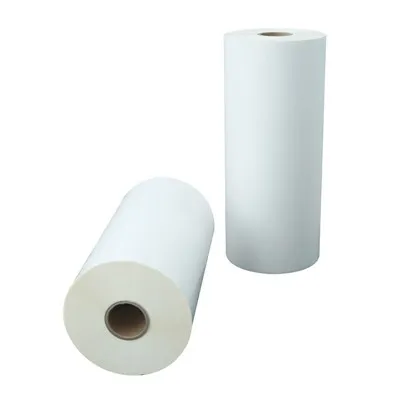
Now, let’s wrap this up. If you’re a business owner, graphic designer, signage installer, or just someone who works with laminating film, the answer to “does anti-scratch laminating film have anti-static coating?” is: often, but not always. If you’re working on outdoor projects, high-traffic indoor projects (like menus, signage that gets touched a lot), or projects where dust/lint is a problem, you definitely want to make sure your film has that anti-static layer. If you’re using it for a one-off indoor project that doesn’t see a lot of wear, it might not matter, but it’s almost never a bad thing to have.
Holographic Thermal Laminating Film If you’re tired of fighting static dust on your laminated prints, or dealing with misaligned rolls mid-job, we’ve got you covered. Our standard anti-scratch laminating film comes with permanent anti-static coating on the back, and we also do custom industrial grades for clients with specific needs. Drop us a line to talk through your project—we’ll help you pick the right film, no fine print, no vague answers.
References
- Ohman, J. (2021). Static Control in Plastic Films for Graphic Applications. Journal of Coated Fabrics, 48(3), 189-205.
- Smith, L. (2022). Anti-Sratch Laminate Coatings: Composition and Performance. Polymer Engineering & Science, 62(7), 2145-2153.
- National Association of Signage Manufacturers. (2023). Best Practices for Laminating Film Selection for Outdoor and Indoor Signage. NASM Technical Bulletin 17-03.
Yantai Hongqing Packing Material Co., Ltd.
Yantai Hongqing Packing Material Co., Ltd. is one of the most professional anti-scratch laminating film manufacturers and suppliers in China, also supports customized service. Welcome to wholesale advanced anti-scratch laminating film made in China here and get quotation from our factory. Quality products and reasonable price are available.
Address: Eastern Industrial Park, Taocun, Yantai, Shandong Province, China
E-mail: cindy@ythongguang.cn
WebSite: https://www.hqingnewmat.com/
