If you’ve ever spent time on a construction site, or even walked past one, you know scaffolding is more than just a stack of poles and planks. For us—scaffolding accessories suppliers—every pin, clamp, bracket, and guardrail isn’t just a part. It’s the difference between a worker going home safely at the end of the day and an accident that leaves them hurt. That’s why one of the most common questions we get from contractors, site managers, and safety officers isn’t about pricing or delivery timelines. It’s this: How often should scaffolding accessories be inspected? Scaffolding Accessories
Let’s cut to the chase: There’s no one-size-fits-all answer, and anyone who tells you differently is either skipping safety protocols or trying to sell you a one-size-inspection-fits-all contract. Over the 12 years we’ve been in the accessory business, we’ve worked with 100+ construction teams, from small residential remodelers to large commercial building firms, and seen what happens when inspections are rushed, skipped, or done on the wrong schedule. I’ve stood on a site last spring where a rusted scaffold coupler snapped because no one checked it after a rainstorm, and watched a crew shut down an entire job for three days because their inspectors didn’t know how to spot a cracked base plate. The math isn’t hard here: Skipping inspections isn’t just a safety risk. It’s a cost risk—missed deadlines, OSHA fines, and workers’ comp claims that make a single discount on parts look tiny in comparison.
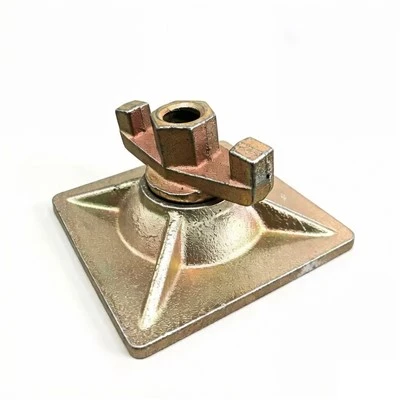
Let’s start with the basics. First, we need to define what we’re even talking about when we say “scaffolding accessories.” This isn’t just the obvious guardrails or toe boards. It’s the load-bearing parts: swivel clamps that hold poles together, ledger brackets that support work planks, base collars that keep the entire scaffold anchored to the ground, pin locks that stop cross braces from slipping, and even the small parts like safety chains and tie rods that keep the whole structure stable. Every one of these parts has a job. If even one fails, the entire scaffold becomes unstable. So inspection isn’t just a “check the big parts” task—it’s a deep dive into every component that keeps people 10, 20, 30 feet in the air safe.
Now, how often? The first rule we share with all our customers is that there are three core inspection frequencies, each tied to specific conditions. Let’s break them down by when they apply, because that’s the part most guides leave out.
First: Pre-use inspections, before each single work shift. This is non-negotiable, and it’s the inspection that makes or breaks scaffold safety. I know what you’re thinking—“We don’t have time to do a full check every morning after a 12-hour day on the site.” But here’s the thing: This isn’t a full structural audit. It’s a quick, 5-minute walkaround that anyone on the crew can do—though ideally, it should be a trained member of the team. Last year, we supplied a set of new base plates to a residential roofing crew in Ohio. Their regular inspection was monthly, which was their mistake. On the third day of a 10-day roof replacement, one of the base plates had shifted into soft, muddy ground from overnight rain, making the entire scaffold lean. The pre-use check that morning would have seen that. Instead, when a worker stepped up, the scaffold wobbled so bad he had to jump off, and they lost a full day of work to fix it. Pre-use checks should cover things like: Are all clamps tight? Are pins locked in place? Are there any obvious cracks in planks or braces? Is the base still level? Is there any debris blocking access to the scaffold? This takes 10 minutes tops, and it’s the most critical inspection of all. OSHA even formalized this in 2018 when they updated scaffold safety standards for the construction industry—they now require daily pre-use checks, and we make sure every accessory we sell has clear, simple labels to make that check easier, no fancy tools needed.
Second: Detailed, periodic inspections, done at least once a week for scaffolds that are in constant use. If you’re a general contractor building a 10-story apartment complex, your scaffold is up for weeks or months, moving every few days as floors are finished. Those accessories take a beating: sun and rain rusting metal, foot traffic wearing down pin locks, wind shifting tie rods, even tools being dropped onto clamps. A weekly inspection isn’t just for small issues. It’s for things like: Checking for hidden rust inside clamp joints (the kind you can’t see from the outside), testing the tension of tie rods that anchor the scaffold to the building, verifying that load-bearing brackets aren’t bending under the weight of materials or workers, and checking for signs of wear on safety chains that might be holding up access planks. We worked with a commercial painting crew in Chicago last winter who did weekly checks, and in one inspection they found a small crack in a ledger bracket that had been hidden by a layer of paint. If they’d waited another week, that bracket would have failed when the crew was moving 5-gallon paint buckets across the plank. Weekly inspections also matter for scaffolds that are only used periodically—like a one-off remodel job that’s spread out over a month. Even if the crew only uses the scaffold two days a week, a full check every seven days will catch issues from idle time, like rodents chewing through safety chains or rainwater pooling in base collars and causing rust.
Third: Major inspections after any event that could damage the scaffold or its accessories. This is the part most people miss. Inspections don’t just happen on a set schedule. They happen after a storm—even a small thunderstorm with high winds, after a tool or material falls onto the scaffold, after a scaffold has been disassembled and reassembled at a new spot on the job site, or even after a long period of inactivity, like a holiday break where no one touched the scaffold for three days. Last year, we had a customer in Texas who had a scaffold up for a warehouse expansion. A tropical storm rolled through, with 40-mile-an-hour winds, and no one did an inspection after the storm. A week later, a clamp had worked loose from the wind, and when a worker stepped onto the scaffold, a cross brace slipped out. The biggest takeaway here: If something changes on the site, or a force outside normal daily use hits the scaffold, stop work and inspect every accessory before anyone steps back up. This isn’t an extra step—it’s how you avoid avoidable accidents.
But here’s the catch: These frequencies only work if you’re using quality scaffolding accessories, not the cheap, no-name parts you find at a big-box hardware store. I’ve seen contractors buy $5 clamps instead of the $8 ones we supply, just to save a few bucks. Those cheap clamps are made from thin, low-grade steel, rust in half the time, and break under the same load our clamps handle with ease. When you use our accessories, they’re tested to meet ANSI (American National Standards Institute) and OSHA standards, so their lifespan is longer, and the inspections are more effective. A rust-resistant swivel clamp from us will show visible signs of wear slowly enough that your weekly inspections will catch issues before they become dangerous, whereas a cheap clamp might snap in two between inspections. That’s why we always tell our customers: Don’t cut corners on parts, because cutting corners on parts means you might be cutting corners on inspection frequency too.
Another thing that affects how often you need to inspect: the type of work the scaffold is used for. If it’s a light-duty scaffold, just for workers carrying small tools, inspections can follow the standard schedule. But if it’s a heavy-duty scaffold, used to stack 50-pound bags of concrete, or hold a lift for window installation, you need to bump up the inspections. For heavy-duty scaffolds, our recommendation is daily pre-use checks, a mid-week deep inspection, and a full structural check every three days, because the accessories are under far more stress. We also recommend that heavy-duty scaffolds have a dedicated safety officer on site, not just a crew member doing a quick walkaround—someone trained to spot the kinds of hidden issues that come with heavy loads, like bent base plates or stretched tie rods.
Now, let’s talk about the mistakes we see contractors make all the time. The first mistake is setting an arbitrary monthly inspection, no matter what. I had a customer in Florida a few years ago who told me he inspected his scaffold once a month, no exceptions. When we visited his site, we found that one of his swivel clamps had rusted through because he’d left the scaffold up through hurricane season, and the monthly inspection had slipped by a week. That clamp failed a few days later, and he got a $12,000 OSHA fine. The second mistake is assigning an untrained person to do inspections. If you’re not sure what a cracked ledger bracket looks like, or how to test if a tie rod is properly tensioned, you’re going to miss issues. That’s why we offer free training for all our customers—we’ll send a quick guide, host a 30-minute virtual session, or even come to your site to train your crew on how to do inspections right, because we don’t just sell parts—we want our accessories to be used safely. The third mistake is ignoring minor issues between inspections. If you see a small crack in a pin lock on Tuesday, fix it before Friday, don’t wait until the weekly inspection. Small issues turn into big accidents faster than you think.
So to answer the original question: How often should scaffolding accessories be inspected? The short answer is: Every single day before use, at least once a week for active scaffolds, and immediately after any event that could impact the structure. The longer, more accurate answer is: It depends on the conditions of your site, the type of work you’re doing, and the quality of the accessories you’re using. But whatever the schedule is, make sure it’s not a box you check—it’s a step that keeps your workers safe.

If you’re tired of struggling with scaffold accessories that wear out too fast, or if you need help setting up an inspection schedule that works for your job site, we’re here to help. We supply high-quality, tested scaffolding accessories that meet all safety standards, and our team can walk you through what inspections you need for your specific projects. Contact our team today to discuss your needs and get more information on our products and support services.
Formworks References
OSHA Standard 1926.451: Scaffolds
ANSI/ASSE A10.8: Safety Requirements for Scaffolding
National Scaffold & Access Industry Association (NSAIA) Inspection Guidelines
Rizhao Wellfit Scafform Co., Ltd.
As one of the most professional scaffolding accessories manufacturers and suppliers in China, we have world-leading production equipment and strong manufacturing capabilities. Please feel free to buy high quality scaffolding accessories at competitive price from our factory.
Address: No. 7, Huasheng Road, Taoluo Town Industrial Zoon, Donggang District, Rizhao City
E-mail: sales@wfscafform.com
WebSite: https://www.wfscafform.com/
