Hey there! I’m a supplier of Automatic Surface Grinders, and I’ve seen a lot of folks struggle with thermal deformation during the grinding process. It’s a real pain in the neck, but don’t worry – I’ve got some tips and tricks to help you prevent it. Automatic Surface Grinder
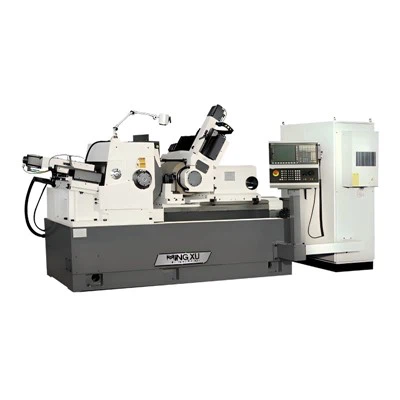
First off, let’s talk about what thermal deformation is. When you’re grinding a workpiece with an Automatic Surface Grinder, the friction between the grinding wheel and the workpiece generates heat. This heat can cause the workpiece to expand, which can lead to dimensional inaccuracies and surface finish problems. That’s thermal deformation in a nutshell.
So, how can you prevent it? Well, there are a few things you can do.
1. Control the Grinding Parameters
One of the most important things you can do is to control the grinding parameters. This includes the grinding wheel speed, feed rate, and depth of cut. If you run the grinding wheel too fast, it’ll generate more heat, which increases the risk of thermal deformation. Similarly, if you feed the workpiece too quickly or take too deep a cut, you’ll also generate more heat.
I usually recommend starting with a lower grinding wheel speed and feed rate, and then gradually increasing them as you get a feel for the process. And when it comes to the depth of cut, keep it small. You can always make multiple passes to achieve the desired finish.
For example, if you’re grinding a hard material like stainless steel, you might want to start with a grinding wheel speed of around 1800 RPM, a feed rate of 0.01 inches per revolution, and a depth of cut of 0.001 inches. As you progress, you can adjust these parameters based on the results you’re getting.
2. Use Coolant
Coolant is your best friend when it comes to preventing thermal deformation. It helps to dissipate the heat generated during the grinding process, keeping the workpiece and the grinding wheel cool. There are different types of coolants available, such as water-based coolants and oil-based coolants.
Water-based coolants are more common because they’re cheaper and easier to clean up. They also have good cooling properties. Oil-based coolants, on the other hand, provide better lubrication, which can reduce friction and heat generation.
Make sure you apply the coolant properly. It should be directed at the point where the grinding wheel and the workpiece meet. You can use a coolant nozzle to ensure that the coolant is sprayed directly onto the grinding area. And don’t forget to keep the coolant level topped up. A low coolant level can reduce its effectiveness.
3. Choose the Right Grinding Wheel
The type of grinding wheel you use can also have a big impact on thermal deformation. Different grinding wheels are designed for different materials and applications. For example, if you’re grinding a soft material like aluminum, you’ll want to use a grinding wheel with a coarser grit. This will allow the wheel to cut through the material more easily, generating less heat.
On the other hand, if you’re grinding a hard material like carbide, you’ll need a finer grit wheel. But be careful – a very fine grit wheel can also generate a lot of heat if it’s not used correctly.
You also need to consider the bond type of the grinding wheel. The bond holds the abrasive grains together. There are different bond types, such as vitrified, resinoid, and metal bonds. Vitrified bonds are the most common and are suitable for a wide range of applications. Resinoid bonds are more flexible and are often used for grinding thin or delicate workpieces. Metal bonds are very strong and are used for grinding hard materials like carbide.
4. Monitor the Workpiece Temperature
It’s a good idea to monitor the temperature of the workpiece during the grinding process. You can use a non-contact infrared thermometer to measure the temperature. If the temperature starts to get too high, you need to take action. You can reduce the grinding wheel speed, feed rate, or depth of cut, or increase the coolant flow.
By monitoring the temperature, you can catch potential problems before they lead to thermal deformation. And it’ll also help you to optimize the grinding process for better results.
5. Allow the Workpiece to Cool
After you’ve finished grinding, it’s important to allow the workpiece to cool down before you measure it or move on to the next operation. If you measure the workpiece while it’s still hot, you’ll get inaccurate measurements because of the thermal expansion.
Let the workpiece sit for a while, preferably in a cool and dry place. This will allow it to return to its normal temperature and dimensions.
6. Maintain Your Automatic Surface Grinder
A well-maintained Automatic Surface Grinder is essential for preventing thermal deformation. Make sure you keep the machine clean and lubricated. Check the grinding wheel for wear and damage regularly, and replace it when necessary.
Also, check the alignment of the grinding wheel and the workpiece. A misaligned grinding wheel can cause uneven grinding and generate more heat. You can use a dial indicator to check the alignment and make any necessary adjustments.
7. Train Your Operators
Last but not least, make sure your operators are properly trained. They need to understand the importance of preventing thermal deformation and how to use the Automatic Surface Grinder correctly. Provide them with training on the grinding parameters, coolant usage, and workpiece handling.
Encourage them to ask questions and share their experiences. This will help to improve the overall grinding process and reduce the risk of thermal deformation.
In conclusion, preventing thermal deformation during grinding with an Automatic Surface Grinder is all about controlling the heat generated during the process. By following these tips, you can minimize the risk of thermal deformation and achieve better results.

If you’re in the market for an Automatic Surface Grinder or have any questions about preventing thermal deformation, don’t hesitate to reach out. We’re here to help you get the most out of your grinding operations.
Surface Grinding Machine References:
- "Grinding Technology: Theory and Applications of Machining with Abrasives" by Stephen Malkin
- "Manufacturing Engineering & Technology" by Serope Kalpakjian and Steven Schmid
Wuxi Mingxu Machinery Equipment Co., Ltd.
As one of the most professional automatic surface grinder manufacturers and suppliers in China, we’re featured by quality products and good price. Please rest assured to buy the best automatic surface grinder for sale here from our factory. Also, custom service is available.
Address: No. 5-5 Jinke Wealth Plaza, Changjiang North Road, Xinwu District, Wuxi City, Jiangsu Province
E-mail: yingyingmxjd@163.com
WebSite: https://www.mingxu-china.com/
