Hey there! I’m a supplier of forklift robots, and I often get asked about the communication protocols these nifty machines use. In this blog, I’m gonna break it down for you, so you can have a better understanding of what makes these forklift robots tick when it comes to talking to other devices and systems. Forklift Robot
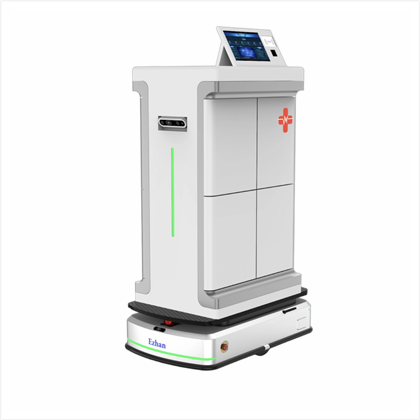
First off, let’s understand why communication protocols are such a big deal for forklift robots. These robots don’t operate in isolation. They need to interact with warehouse management systems (WMS), other robots on the floor, and sometimes even security systems. A proper communication protocol ensures seamless data transfer, which means better efficiency, fewer errors, and overall smoother operations in the warehouse.
One of the most commonly used communication protocols in forklift robots is Ethernet/IP. It’s a widely adopted industrial Ethernet protocol that provides a common network infrastructure for control and information transfer. I like to think of it as the "lingua franca" of industrial automation. With Ethernet/IP, forklift robots can communicate with other devices on the same network, like conveyor belts, scanners, and the central WMS. It’s easy to set up and offers high-speed data transfer, which is crucial when you’re dealing with real-time operations. For example, if a forklift robot needs to pick up a pallet at a specific location and the WMS sends the coordinates, Ethernet/IP can quickly and accurately transmit that data to the robot.
Another popular protocol is Modbus TCP. It’s a variation of the classic Modbus protocol but designed for use over TCP/IP networks. Modbus TCP is super flexible and can be used in a wide range of applications. Many of our forklift robots can be configured to use Modbus TCP to communicate with legacy systems in older warehouses. It’s like a bridge between the old and the new. The protocol allows the robot to read and write data to registers in other devices. So, if there’s an old inventory system that the forklift needs to interact with, Modbus TCP can make that happen.
CANopen is also worth mentioning. It’s a high-level communication protocol based on the Controller Area Network (CAN) physical layer. CANopen is known for its robustness and reliability, which are essential qualities for forklift robots operating in harsh industrial environments. It’s often used for communication between different subsystems within the robot itself, like the motor control unit, the sensor system, and the navigation module. For instance, if the robot’s sensors detect an obstacle, CANopen can quickly transmit that information to the motor control unit to stop the robot safely.
Now, let’s talk about wireless communication protocols. Wi-Fi is a no-brainer in modern warehouses. It allows forklift robots to stay connected to the WMS without the need for physical cables. Our forklift robots are equipped with Wi-Fi modules that support the latest 802.11 standards. This means fast and stable wireless communication, even in large warehouses with multiple access points. Wi-Fi also enables remote monitoring and control of the robots. You can sit in your office and keep an eye on the robots’ status, battery level, and task progress.
Bluetooth is another wireless option that we sometimes use. It’s great for short-range communication, like when the forklift robot needs to interact with a handheld device carried by a warehouse employee. For example, an operator can use a Bluetooth-enabled tablet to send custom commands to the robot or to receive real-time updates on its position.
But choosing the right communication protocol isn’t always a one-size-fits-all situation. It depends on several factors. The size of the warehouse is a big one. In a small warehouse, a simple protocol like Modbus TCP might be sufficient. But in a large, complex distribution center with hundreds of robots and multiple systems, you might need the power and flexibility of Ethernet/IP or Wi-Fi.
The type of operations also matters. If your warehouse has a high volume of fast-paced operations, you’ll need a protocol that can handle high-speed data transfer, like Ethernet/IP or the latest Wi-Fi standards. On the other hand, if your operations are more intermittent and don’t require real-time data, a less bandwidth-intensive protocol like Bluetooth might do the trick.
Cost is another consideration. Implementing some protocols can be more expensive than others. For example, setting up a Wi-Fi network in a large warehouse can require a significant investment in access points and infrastructure. But in the long run, the benefits of real-time communication and improved efficiency might outweigh the initial costs.
At our company, we work closely with our customers to determine the best communication protocol for their specific needs. We understand that every warehouse is unique, and we’re committed to providing solutions that are tailored to each customer’s requirements.
If you’re in the market for forklift robots and are wondering about the communication protocols, don’t hesitate to reach out. We can have a chat about your warehouse setup, your operational needs, and help you choose the right forklift robots with the appropriate communication protocols. Whether you’re looking to upgrade your existing warehouse or setting up a brand new one, we’ve got the expertise and the products to make it a success.
In conclusion, communication protocols are the backbone of forklift robot operations. They enable these robots to work in harmony with other systems and devices in the warehouse, leading to increased productivity and efficiency. By understanding the different protocols available and choosing the right one for your needs, you can take your warehouse operations to the next level.

So, if you’re interested in learning more or are ready to start a conversation about purchasing forklift robots, just drop us a line. We’re here to help you make the best decision for your business.
Hybrid Robot References:
- "Industrial Communication Networks" by Peter Hancke
- "Wireless Sensor Networks: A Systems Perspective" by Krishna M. Sivalingam
Shenzhen Ezhan Technology Co., Ltd.
We’re known as one of the most reliable forklift robot manufacturers and suppliers in China. With abundant experience, we warmly welcome you to buy bulk customized forklift robot from our factory. If you have any enquiry about cooperation, please feel free to email us.
Address: Room 1808, 1809, 1810, Building 2, Aipark, Baolong 4th Road, Longgang District, Shenzhen City
E-mail: sales01@ezhankeji.com
WebSite: https://www.ezhanrobot.com/
