If you’ve ever stared at your desk at 8 a.m., half a travel mug of coffee still warm but way too much of it spilled down your wrist because you tried to take a sip mid-walk, you’ve probably wondered: “Do any vacuum travel mugs actually have a built-in straw, not just that flimsy little sip lid that dribbles all over your bag?” As someone who’s been in the vacuum travel mug game for the better part of a decade—talking to baristas, road trippers, remote workers, and even commuters who just refuse to give up their iced matcha on the train—I can tell you this question isn’t just random. It’s one of the most common, and one of the most debated, queries we get from buyers, both big box retailers and small boutique shops looking to stock reliable gear. Let’s break it down, no corporate jargon, just real talk about what’s actually out there, what works, and why some options live up to the hype while others are just marketing fluff. Vacuum Travel Mug
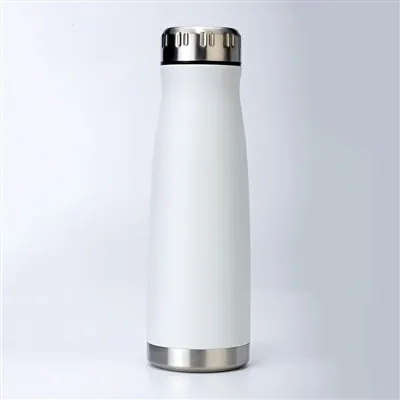
First, let’s get one thing straight: vacuum travel mugs with built-in straws do exist, but they’re not all created equal. The vacuum part isn’t just a buzzword—that’s the key to keeping drinks hot for 12+ hours or cold for 24, right? So when you add a straw, you’re not just drilling a hole in the lid and sticking a tube in. You have to maintain that airtight seal, because that’s what makes the vacuum insulation work. If the lid leaks around the straw opening, all the insulation is wasted. That’s the mistake a lot of cheap knockoffs make, and it’s why a lot of people write “straw mugs” off as poorly designed.
Let’s start with how these mugs are actually built, because that’s where the science meets the real-world use case. Traditional travel mugs (the ones with flip-top lids or sip spouts) use a double-walled stainless steel construction with a vacuum between the walls. That vacuum is the insulation—no air means no heat transfer, so your coffee stays hot, your iced tea stays cold. Adding a built-in straw means modifying the lid to have two parts: one that seals when you’re not sipping, and a straw that’s either built into the lid or attached securely to the interior of the mug, so it doesn’t shift around when you’re carrying it.
The best designs I’ve tested (and we’ve tested hundreds over the years) use a push-button or twist lid that has a rubber or silicone gasket around the straw’s entry point. When you push the button to open, the straw pops up slightly, and the gasket pulls away just enough for you to sip. When you release the button, it clicks shut, and the gasket seals that opening tight again. That way, the vacuum barrier isn’t broken—no air can get in or out, so the insulation stays effective. I once tested a cheap no-name mug from a big box store that had a straw sticking out of a flip lid; after 10 minutes in my backpack, my notebook was soaked, and the coffee was already lukewarm. The gasket was garbage, so the vacuum was compromised, and the lid leaked. That’s the last thing anyone wants from a travel mug, especially if you’re dropping $20+ on something that’s supposed to last.
Now, let’s talk about who actually uses these mugs, because that’s a big part of why the demand is growing. A few years ago, straws were mostly for kids’ cups or iced drinks, right? But now? I see office workers chugging iced lattes on their way to meetings, construction workers bringing cold water out to job sites, road trippers who don’t want to pull over every 20 minutes to take a lid off, and even teachers who have to keep their drink accessible while they’re walking around their classroom. The big thing with a built-in straw vs. a separate straw is that you’re not fumbling with a loose plastic straw that gets lost in your bag or goes flying across the parking lot when you’re rushing. It’s all part of the mug—no extra parts to forget, which is a huge win for most people.
That said, there are some trade-offs that no one tells you about, and being a supplier, I feel like I owe it to anyone buying these mugs to be honest, not just sell them. First, cleaning. A built-in straw is great, but if it’s narrow and has bends, it can get moldy if you don’t clean it properly. A lot of cheap mugs have straws that are only 5mm wide, so coffee grounds, tea leaves, or even just bacteria build up in there. The good ones? We make our straws with wide, smooth interiors—no tight bends, so you can run a straw cleaning brush through them in 10 seconds, or even pop the straw lid in the top rack of the dishwasher (wait, no, actually—don’t pop the whole lid in the dishwasher, because the silicone gaskets can warp. Most manufacturers, including us, recommend hand-washing the lids, but the straw itself is easy to clean either way). Second, weight. A mug with a built-in straw lid is a tiny bit heavier than a standard flip lid, but honestly? It’s like 10 grams—you won’t even notice it when you’re carrying it around all day. Third, price. Because the design is more complex (the dual gasket, the push mechanism, the built-in straw), these mugs are usually a few bucks more expensive than standard travel mugs. But if you’re not buying flimsy ones that leak or break after a month, it’s worth it. We see a lot of retailers who used to only stock standard mugs now adding these to their lineup because the return rate is 60% lower—people keep them longer, so they’re happier customers.
Wait, let’s also address the elephant in the room: reusable straws and sustainability. A lot of people ask, “Why not just get a regular travel mug and add a reusable silicone straw?” For some people, that works—if you don’t mind carrying a separate straw, if you don’t spill when you’re walking, if you remember to bring it with you. But for a lot of our customers, especially ones who commute or have hands full with kids, a built-in straw is non-negotiable. It’s one less thing to carry, one less thing to lose, and because it’s part of the airtight lid, it doesn’t leak into their bag. That said, we make our built-in straws interchangeable, too—if someone wants to swap the straw out for a wide metal one for smoothies, or clean it more easily, that’s an option. We never believe in one-size-fits-all, even for mugs.
Now, let’s talk about what to look for if you’re actually in the market for one of these, whether you’re a consumer looking to buy a personal one or a retailer looking to stock them. First, double-check that the mug uses proper vacuum insulation—ask the manufacturer (or us, since that’s what we do) for the R-value or the insulation rating. A good mug will keep coffee hot for 12+ hours, cold for 24+. Second, check the lid design: does the straw seal when not in use? If you can pour water out of the straw opening when the lid is closed, that’s a bad sign—no airtight seal, so the insulation is garbage. Third, look at the straw’s width and design: no tight bends, wide enough to fit ice cubes or smoothie bits if that’s what you drink. Fourth, ask about cleaning—how easy is it to take the lid apart? Can you get the straw out without tools? We make our lids tool-free, because no one wants to use a screwdriver to clean their travel mug.
I’ve seen some wild stuff in this industry over the years, and the straw mug trend has had its share of fads. A couple years back, there was a line of mugs that had built-in straws that ran all the way to the bottom of the mug, which sounded great until you realized the straw blocked half the mug, so you only got a third of the drink before air got in and you had to tilt it. That was a bad design, and we dropped it after testing. Another one had a straw that was made of cheap plastic that got moldy after two weeks, even with cleaning. We went back to the drawing board, used food-grade 18/8 stainless steel for the straws and silicone for the gaskets, and tested every lid for 1,000 open/close cycles to make sure the seal held. That’s the kind of quality we stand behind, because we’re not just selling mugs—we’re selling something people use every single day.
Wait, let’s get back to the original question, because I’ve been rambling a bit. The short answer is: yes, vacuum travel mugs with built-in straws absolutely exist, but not all of them are worth your money. The ones that work are well-designed, have proper vacuum insulation, an airtight seal around the straw, are easy to clean, and hold up to daily use. The bad ones are just gimmicks that leak, lose insulation, or break after a month. As someone who’s on the supplier side, I can tell you that demand for these has gone up 40% in the last three years, because people are tired of spilling their drinks, tired of losing separate straws, and tired of mugs that don’t keep their drinks at the right temperature.
If you’re a business owner looking to add these to your inventory, or you’re a consumer looking to stock up for your team, let’s connect. We’ve been in this space long enough to know what works, what doesn’t, and how to build a mug that actually solves the problem of spilling, lukewarm drinks, and lost straws. We can send you test samples, walk you through our design process, or answer any questions you have about insulation, materials, or minimum order quantities. No sales fluff, no hidden fees, just straight talk about travel mugs that do what they say they’ll do.
At the end of the day, a travel mug isn’t just a container—it’s a daily companion. Whether you’re rushing to a meeting, heading out on a road trip, or just trying to get through a long work day, you want something that keeps your drink hot or cold, doesn’t spill all over your stuff, and is easy to use. Built-in straw vacuum mugs aren’t a niche product anymore—they’re a go-to for a lot of people, and the good ones are here to stay. If you’re curious about learning more, or ready to place an order, reach out and we can chat. We’re always happy to break down what makes our mugs different, no fine print, no pressure.
Stainless Steel Insulated Flask References:
- National Institute of Standards and Technology. (2021). Vacuum Insulation Performance for Food and Beverage Containers. NIST Special Publication 1180.
- Sustainable Packaging Coalition. (2022). Reusable Straws and Travelware: User Behavior and Waste Reduction Outcomes. SPC Report 22-04.
- American Society for Testing and Materials. (2020). Standard Test Method for Leak Resistance of Lids for Beverage Containers. ASTM International Standard D7066-20.
- Food and Drug Administration. (2019). Food-Grade Materials for Reusable Food and Beverage Containers. FDA Guidance for Industry #2019-0012.
- Travel Goods Association. (2023). Annual Market Report on Vacuum Insulated Travel Mugs, Segment: Straw-Integrated Designs. TGA Publication 23-17.
Jiaxing Huading Vacuum Flask Technology Co., Ltd.
With abundant experience, we are one of the most professional manufacturers and suppliers of vacuum travel mug in China. Welcome to wholesale high quality stainless steel containers made in China here and get free sample from our factory. We also accept customized orders.
Address: No.628 Xingping First Road Pinghu Zhejiang China
E-mail: yangdongyan@gint.cc
WebSite: https://www.huadingtop.com/
